Sometimes a single act of compassion does more than save a life. It opens the door to a larger conversation that stretches far beyond the moment itself. Recently, one dog rescue in China did exactly that. What began as an urgent effort to help an injured animal quickly captured public attention and ignited discussions about animal welfare laws, cultural traditions, and the future of dog protection across the country.
The rescue became more than a story about one dog. It became a symbol of how societies evolve when compassion meets awareness.
A rescue that moved millions of people
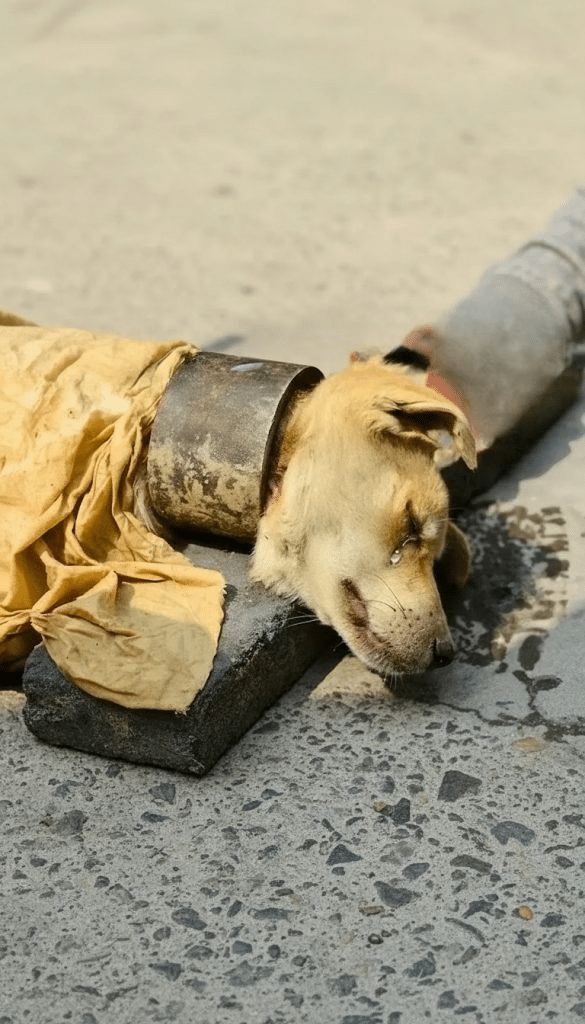
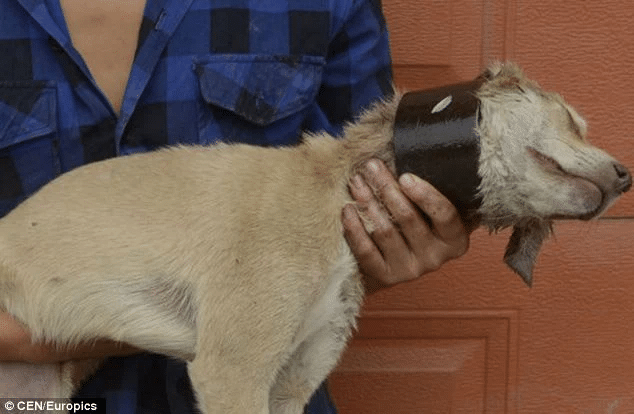
The situation came to light when animal rescue volunteers received reports of a dog in visible distress. When they arrived, they discovered a troubling scene. A collar had become tightly embedded around the dog’s neck. Over time, the pressure had restricted movement and caused serious injury.
The collar could not simply be loosened or removed by hand. It had tightened gradually, becoming firmly stuck. Rescuers understood that acting too quickly could cause additional harm, so they approached the situation carefully.
Video Dog Rescue Highlights China’s Growing Debate Over Animal Cruelty and Dog Meat Consumption
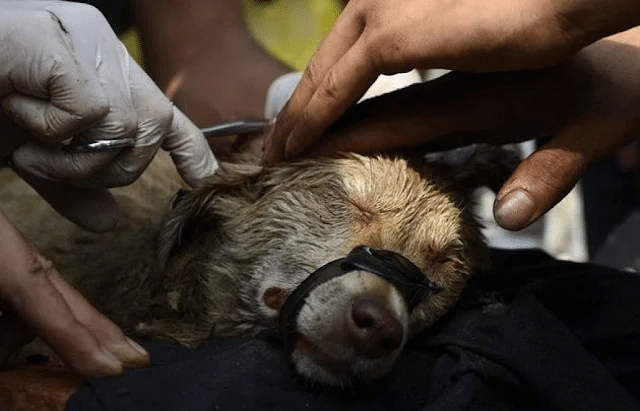
Using specialized cutting tools, they worked patiently to free the dog. Every second mattered. The longer the collar remained in place, the greater the risk of further complications.
Finally, after careful effort, the collar was removed.
The dog was immediately transported to a veterinary clinic, where medical staff cleaned the affected area and began treatment designed to promote healing and prevent infection. Under professional care, the dog stabilized.
But the rescue story did not end at the clinic.
Images and updates from the rescue spread rapidly across social media platforms. Millions of people followed the story online, expressing sympathy for the dog and asking important questions about animal protection.
Authorities soon opened an investigation to determine who had been responsible for the situation.
Yet the public response showed that many people were thinking about something larger than one case.
They were thinking about the system itself.
A discussion about legal protections
One of the central issues raised by the rescue involves China’s current legal framework surrounding animal welfare. While certain regional guidelines and regulations exist, the country does not yet have a comprehensive national law that clearly defines and penalizes all forms of animal cruelty.
This absence creates challenges.
Without consistent national standards, some cases fall into legal gray areas where enforcement may vary from one location to another. Advocates argue that clearer laws could provide stronger protection and more consistent accountability.
The collar rescue encouraged many citizens to revisit this issue. Online conversations quickly expanded beyond the individual incident. People discussed whether stronger national legislation could help prevent similar situations in the future.
For some observers, the moment felt like a turning point in public awareness.
The broader conversation about dog meat consumption
At the same time, the rescue revived debate around another sensitive topic in China: the consumption of dog meat in certain regions.
Historically, dietary traditions involving dog meat have existed in parts of the country, particularly in colder regions where it was sometimes believed to provide warmth and health benefits. These customs developed over generations and were shaped by local economic and environmental conditions.
However, China’s relationship with dogs has always been complex.
For thousands of years, dogs have also served as guardians, hunting companions, and loyal household pets. In modern urban life, that role as companion animals has become increasingly prominent.
Rapid urbanization and economic growth have changed daily life in cities like Shanghai and Beijing. Pet ownership has surged, and dogs are now widely seen as family members rather than livestock.
This cultural shift has gradually influenced public attitudes.
Many younger citizens, particularly those living in urban environments, feel uncomfortable with the idea of dogs being used as food. Social media platforms amplify these perspectives, connecting discussions within China to global conversations about animal welfare.
The rescue of the injured dog therefore became part of a broader dialogue about how traditions and modern values intersect.
Another rescue that intensified debate
Earlier in the year, a large scale rescue operation in Chongqing added new momentum to the discussion. Volunteers working with local authorities intercepted transport vehicles carrying more than 1500 dogs.
The animals had been confined in cramped cages during a long journey. Rescue teams intervened and transferred the dogs to a temporary facility where they received food, water, and medical care.
The scale of the rescue shocked many people who followed the story.
While many animals recovered with treatment, the incident highlighted the logistical challenges associated with long distance transport and animal welfare oversight. Advocates argued that the situation demonstrated why stronger regulations and monitoring are necessary.
For many observers, the message became clear.
Rescue operations save lives, but lasting change requires structural reform.
A historical perspective on dogs in Chinese society
To understand the current debate, it helps to recognize the long history of dogs in Chinese culture. Archaeological evidence shows that dogs were domesticated in China thousands of years ago. Throughout history, they served as working animals, guards, and companions.
Regional food customs also developed during periods when resources were limited and communities relied on locally available protein sources.
But societies evolve.
Today, China’s pet industry has grown rapidly. Urban families invest heavily in pet food, grooming services, veterinary care, and pet friendly housing. Dog parks and training centers have become common features of modern cities.
In 2020, an important policy change reflected this shift. Dogs were officially removed from China’s list of livestock animals. Although the move did not create an immediate nationwide ban on dog meat consumption, it signaled a meaningful change in how policymakers categorize dogs.
Many observers saw this step as recognition that dogs are increasingly viewed as companion animals.
A society in transition
The collar rescue and the Chongqing transport intervention highlight a society navigating a complex period of cultural transition. Traditions developed over centuries do not disappear overnight. At the same time, new values can reshape how communities view long standing practices.
Social media has accelerated this process by making stories of rescue and compassion visible to millions of people almost instantly.
When people see an animal in distress, empathy grows.
When empathy grows, conversations begin.
And when conversations expand, pressure for reform often follows.
Animal welfare organizations across China continue to expand their work through rescue programs, educational campaigns, and adoption networks. Volunteers dedicate time and resources to helping animals in need, while veterinarians provide essential care for injured or abandoned pets.
Each effort contributes to a broader cultural shift.
Balancing tradition and compassion
Every society eventually encounters moments when historical customs meet evolving ethical standards. The challenge lies in finding ways to adapt while respecting cultural complexity.
For many citizens in China, the discussion surrounding dog welfare is no longer framed as a conflict between tradition and progress. Instead, it is viewed as an opportunity to strengthen compassion and improve standards of care.
The rescue of one injured dog did not create this conversation.
But it illuminated it.
And once a conversation becomes visible, it has the power to shape the future.
Conclusion
The rescue of a dog suffering from an embedded collar sparked widespread attention across China and triggered an important national conversation about animal welfare. While the rescue itself saved one life, it also highlighted broader questions about legal protections, cultural traditions, and evolving public attitudes toward dogs.
The case drew attention to gaps in national animal cruelty legislation and encouraged discussions about stronger, more consistent protections. Additional rescue efforts, including the large scale intervention in Chongqing, further emphasized the importance of systemic oversight.
At the same time, rapid urbanization and changing social values have transformed how many people in China view dogs, increasingly recognizing them as companions rather than livestock.
Together, these developments reveal a society in transition. As awareness grows and dialogue continues, the balance between tradition and compassion may gradually shift toward stronger protection and greater respect for animal welfare.